World Bank Empowers Citizen Cartographers to Enrich Google in Developing World
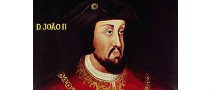 During the late 15th century heyday of Portuguese exploration, King John II forbade the open distribution of any map or navigational chart pertaining to New World discoveries under pain of death. Locked in a global land-grab race with neighbor Spain, cartographic intelligence was critical to expanding political power and exploiting the riches of the spice trade. While the link between this knowledge and economic advantage persists, in the last 500 years we have at least evolved to where transgressions aren’t enforced by the sword but rather the small-print legalese of the modern day end-user license agreement.
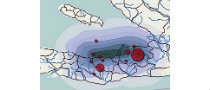 The small print was very much on my mind last week as I read “Empowering Citizen Cartographers”, a piece penned by World Bank official Caroline Antsey that appeared in the New York Times. It begins as a paean to the wonders of crowd sourcing, especially in response to disasters such as the Haiti earthquake where Open Street Map shone as the de facto source of authoritative cartography. But then a new agreement between Google and the World Bank is described, whereby the latter actively promote and disseminate cartographic information from Google’s Map Maker platform. While Ms. Antsey indeed intended to praise Open Street Map, she seems singularly unaware that the actions of her organization may well bury Open Street Map in the developing world.
Because the license is clear: all of the data, all the fruits of the labor of those citizen cartographers, is the property of Google. To be viewed through Google mapping interfaces with source data available under conditions specified by Google alone. By contrast, Open Street Map data–yes, the raw data itself–is easily available to any and all, for purposes both non-profit and commercial.
 Sure, nothing here explicitly prevents Open Street Map from continuing its work, but let’s get real: the deep pockets of Google paired with the imprimatur of the World Bank that effectively steers its partner governments, universities, and NGOs towards using the Map Maker platform may very well overwhelm Open Street Map’s more grass-roots efforts. Google has shown an eager willingness to appropriate the tactics and rhetoric of community mapping, and of late, admitting to a bit of dirty pool in Africa against local startup Mocality.
(Google courageously pointed the finger not at its own employees but rather outside contractors it had hired. Interestingly, if we were talking a violation of its own Map Maker terms, the old blame-the-contractor shtick wouldn’t play as this choice bit of Google language makes clear: “If you are an entity, you acknowledge and agree that you are jointly and severally liable for the actions of your employees, contractors, agents, and other representatives. ” What’s good for the gander isn’t good for the goose, apparently.)
What’s in it for Google? Nothing more than a huge competitive advantage in the exploding smartphone market (and the concomitant local advertising revenue) in the developing world. Imagine the commercial benefit of having exclusive access to the most detailed local cartography, collected for a pittance on the backs of “citizen cartographers”? Even Tom Sawyer would blush. It’s neocolonialism-meets-neogeography, only this time the shiny trinkets being dangled are laptops and Android phones.
If the World Bank was so impressed with the role of Open Street Map in Haiti, why throw its considerable weight behind the profit-seeking Google? Who knows? There have been collaborations in the past, and there appears to be a certain degree of chumminess in those circles. For those assuming Google is the only entity with the technical expertise to pull off the management of the crowd sourcing effort at this scale: please, stop. Not only does Open Street Map have a platform and a track record, it also has the cooperative support of not-small-entities Mapquest and Microsoft. So let’s put away the image of Google nobly shouldering a digital white man’s burden in bringing the developing world into the technically enlightened 21st century.
 Make no mistake, Google has been the primary accelerant in the web mapping explosion of the last six years and they have spread the fruits of their innovation far and wide. But the grating self-regard, borne of ideals that are never acknowledged to be driven by a motive so base as profit, has very much reached its sell-by date. It’s a 30,000 employee company hurtling towards middle-age whose growth has lately disappointed Wall Street: the potential profits in the fast-growing developing world figure largely in its future prospects.
~ ~ ~ ~ ~ ~ ~ ~
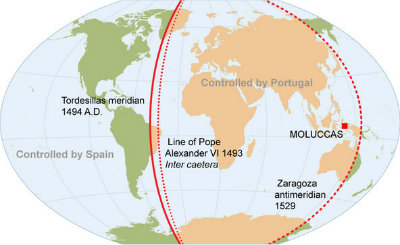
In 1494, Portugal and Spain signed the Treaty of Tordesillas, whereby under the auspices of the Pope Alexander VI, the New World was split between the two Catholic powers ad majorem Dei gloriam. One fears that the institutional favor the World Bank is granting to Map Maker will very much work to the greater glory of Google in the developing world, but at the expense of the full, free, and open access to the valuable information created by its own citizen cartographers.
—Brian Timoney